




As we continue to navigate the impact of the COVID-19 pandemic, most organisations are realising that there will be no return to “normal” and that the way we work has changed forever. The Future of Work is Now: the Employee Experience Premium is the first in a series of white papers from United Minds, Weber Shandwick’s specialist organisational transformation consultancy, exploring how organisations can create the right employee experience for their people in this new world.
Employment is no longer a simple transaction where money is exchanged for skills, capabilities and experience. These days, employers and employees expect much more from this exchange of value.
Employers don’t just want their staff to be present — they want them to be productive, empathetic to customers and colleagues, innovative, creative and display a number of other attributes. In return, employees expect considerably more than simply monetary payment.

In order to achieve this, different employers offer a wide range of tangible and intangible benefits, ranging from the infamous ping pong table and gym memberships to stimulating and purposeful work. Organisations have value propositions based on a unique combination of these benefits in order to attract and retain the best talent. When this exchange of value is in equilibrium and everyone feels treated fairly, an organisation is delivering a good employee experience.¹
The COVID-19 pandemic has interrupted this exchange of value in a very profound way and will continue to do so. The most obvious of these interruptions, entire workforces having to suddenly work from home, is now the least of employers’ concerns. A recent study from United Minds and KRC Research, revealed that over two thirds of those surveyed consider themselves as productive at home as they are in the office and that 74 per cent would like to continue working from home after the pandemic has run its course.²
Many of us are considering even more substantial changes as a result of the pandemic, with large numbers of office-based workers considering relocating from cities to more rural locations knowing they can work just as effectively remotely. New work habits have formed; talk of returning to “normal” misses the point and organisations need to adapt.
The current situation has changed the point of equilibrium that creates a great employee experience. In the course of just a few months, many elements of the value proposition that employers have relied on for so long have been significantly devalued. A subsidised gym membership that employees can’t use has no value. Neither does a ping pong table nor a fridge full of beer in an empty office.
What made us successful in the past is not what will make us successful in the future. As we adjust to a new world of work, in order for organisations to attract, retain and motivate top talent they need to look forward and evolve their employee experience in light of the lessons we have learned during the pandemic. Two factors above all will determine an organisation’s future employee experience: empathetic leadership and radical flexibility.
I. Provide empathetic leadership
Nine months into the pandemic and with no real end in sight, many organisations are realising that they not only need to address the challenge posed by the virus itself but also the impact it is having on their employees’ mental health, career development and personal networks, as well as the corporate culture. In a world where employees are not only navigating the effects of the pandemic but also the economic, political and social justice crises caused or amplified by it, there is a premium on genuine, empathetic leadership.
As the value of more material benefits has declined, the value employees are placing on good leadership and effective line management is increasing. There is no secret to leading organisations today — it’s the same as it has always been.
A few years ago, Google analysed the leadership factors that differentiated high-performing teams from the rest and eight attributes emerged:³

These qualities are more critical now than ever before — nothing about the pandemic has changed these fundamentals. Any leader who displays these eight attributes will be creating an employee experience that will drive better business performance and enable organisations to attract and retain the talent they will need to survive the current crisis.
Line managers have a particularly important role to play. On a day-to-day basis they are the people that create positive work experiences for employees. They are the essential link to employees, able to assess and ameliorate morale and mindset in real-time. All organisations should be looking to find ways to empower line managers to take the steps they feel are appropriate to maintain and improve employee well-being.
II. Embrace radical flexibility
For many years, the flexible working discussion revolved around whether employees could be trusted to work from home on an occasional basis. The pandemic has been a catalyst in this debate. Now that working from home has become the default, employers and employees have benefited from the partial flexibility it has allowed. Many organisations, however, are beginning to face the challenge of reducing burnout in a workforce trying to work flexibly at home within a contractual framework that is designed for more traditional ways of working.
In order to combat the toll that the new ways of working have had on the mental health of employees, the next frontier of flexible working is to give people much more control over their time. The traditional model of working 9am to 5pm, 40 hours a week, with a fixed number of holidays no longer fits with the experience employees are looking for.
The discussion about flexible work in the future will be driven by trusting employees to deliver outcomes rather than focusing on their inputs (time and location, primarily). Introducing activations such as core working hours (e.g. 10am-3pm, with other hours worked at the employee’s discretion), shorter working weeks, increased holiday allowances and workplace closures, can all help people to make the new ways of working more compatible with their lives.
One of the greatest challenges of any crisis is that of helplessness; the feeling that everything is out of our hands. As organisations explore what radical flexibility could mean, there is an opportunity to regain a sense of control and to listen to what their people want. Many will be familiar with the Netflix high performance culture grounded in the trust that people will make good choices ‒ concepts such as unlimited vacation time or an expenses policy that is reduced to five words, “act in Netflix’s best interests”. Organisations don’t need to mirror this but, as with the Netflix example, they should listen to their people and identify solutions that will work for everyone. Applied successfully, organisations should see a reduction in employee burnout and the general toll that the current working conditions is having on mental health.
Conclusion
The future of work is now. Employers expected employees to adapt, almost overnight, to a different way of working. Now employers, too must adapt and look to the future in order to keep their current and prospective workforce engaged. Different organisations will find their own answers to the challenges that this presents. Failure to ensure that employees have empathetic leaders who truly embrace radical flexibility in the way their teams work will lead to a failure to offer the employee experience required to survive the pandemic and rebound robustly once the crisis has passed.
Download a PDF of this report here.
United Minds, a Weber Shandwick consultancy dedicated to organizational transformation, harnesses the power of people to solve critical business challenges. Get in touch at: [email protected]

[1] Siegrist, J. (1996). Adverse health effects of high-effort/low-reward conditions. Journal of Occupational Health Psychology. 1, 27–41. doi: 10.1037/1076–8998.1.1.27
[2] The Workplace as a New Town Square, Weber Shandwick and KRC Research (July, 2020)
[3] Laszlo Bock, Work Rules!: Insights From Google That Will Transform How You Live and Lead, (New York, Twelve Hachette Book Group, 2015), pg 195
by Kate Bullinger, President and Emily Caruso, SVP

“In these unprecedented times.” “Now, more than ever.” “You’re on mute.” Cue the eye roll…
These sentiments and phrases have become cliché precisely because they are true. They represent the experiences that we have both universally shared and the personal impact that we each uniquely feel as a result of the global pandemic.
And now, with 2020 ending in a very different way that we began it, grappling with immediate and far-ranging impacts we’re only beginning to understand, it’s important to reflect on what — to add another cliché to the mix — is shaping up to be the biggest transformation event of our lives.
So just how much has changed since we began 2020? In short, pretty much everything. Just take a look.
Where, when, and how we work. Right now, some of you will be reading this from your home office, seated at a desk behind a closed door that offers you more privacy than in your previously open office space. Some of you will be on the couch; either yours or at your aging parents. At least a few will be hiding in the bathroom, trying to keep out the noise from their children’s remote learning set-ups. Still others in our offices in Asia will be pioneering being back at the office, maintaining six feet of distance, looking through plexiglass dividers at masked co-workers.
Some will be working more than they ever have before, managing a constant flow of crises as clients work to figure out how to best navigate a fraught media, marketing, and employee landscape. Others will feel nervous as things start to slow. Some will clock in at 9 and sign off at 5 in the usual way. Others will work around the schedules that life demands of them, with little ability to plan week to week.
Each of these scenarios will provoke a range of emotions, many in direct conflict. For every person that feels a sense of solidarity as we navigate this together, another will feel truly alone. While some teams who have operated across regions and offices historically and will feel minimal disruption, others are getting used to video conference fatigue and finding ways to recreate the spark of creativity that might come from a chance encounter in the hall. For those who have been in the workforce longer, weathering the burst of the dotcom bubble and the Great Recession, this is yet another period of disruption that can, managed well, lead to more career opportunity. Those that are earlier in their careers might feel more vulnerable; their vision for progression thrown off-course.
Some people want to be back in the office as soon as possible, while others could — or need to — continue remote work for ever. Some of us are energized. Some of us are afraid. Many are both. With limited separation between work and life, we are even more apt to carry these emotions with us into our work and how we connect with others.
Who we work with, and what we work on. In our industry, we are no strangers to watching different elements of our business expand and contract based on economic and social trends. But rarely have we experience a more rapid transitions from in-demand industries, sectors, and areas of expertise to those that have more recently been more specialized. The technology and healthcare industries and associated business have remained strong and in some cases grown, creating new opportunities and new needs. Any business associated with travel and hospitality has been very significantly impacted. And new needs are emerging to support diversity, equity, inclusion, crisis, and employee engagement. This is translating into temporary (or more permanent) pauses on work that might have taken place consistently over the past few years, and client relationships that have taken time and energy to develop. It can also be a time to renew or expand relationships, as we check in on past and potential clients to understand the impacts of the pandemic and racial justice movement on their business, and what they plan to do about it.
It would be naïve not to acknowledge that client services can be particularly vulnerable in times of economic downturn, as companies make tough decisions about discretionary spending. This is particularly true of the current environment, where companies are also struggling to define how to appropriately engage in conversations including but not limited to health, policy, inequality, and justice. Within our own teams and for our clients, we are being asked to persevere through the measures that the business must take to weather the downturn. But the act of doing more with less can be a strong catalyst for creativity, and opportunity for professional growth.
Why we work. Putting necessity aside, finding meaning and purpose in the work that we do has become increasingly important over past decade, bolstered by a strong jobs market and significant demographic shifts. Much has been written about the values that Millennials hold dear and how they differ from previous generations, and with this demographic posed to make up 50% of the workforce in the next two years and 75% by 2025, these values were already on-track to become more predominant.
Despite the compression in the jobs market, the very nature of the circumstances by which we find ourselves here have contributed to many reevaluating their own values and doubling down on purpose. According to recent research that we completed in June in partnership with KRC and Weber Shandwick, 70% of employees in America are ready to take a stand for what is no longer acceptable and make a change for the better. That same research shows that 80% of people will prefer to buy from companies that treated their employees well during the coronavirus pandemic. It’s clear that employees want to work for and consumers want to buy from companies that take a stand.
Choosing a job based on purpose and values is often a privilege and one that not everyone has. But it shouldn’t stop us from seeking purpose in how we engage with one another, in the work that we do, and in the ideas and solutions that we bring to our clients.
So, what can we do about it? Consider the following principles, as well as some key questions that we should all consider, both for ourselves and our teams:
1. Build resilience. We must break out of the historical construct of work/life balance, focusing instead on a more flexible (and ideally, achievable) work/life integration. This will require being more in-tune with ourselves and our teams and intentional about maintaining physical and mental well-being. What it doesn’t require (but it can!) is elaborate planning — many of us don’t have the capacity for that right now. Instead, identify the small acts that will improve balance, from turning off the camera to taking walking meetings around your workspace to scheduling meetings five minutes past the hour to allow for time to do a quick meditation or read an article for fun.
Ask yourself: What are the healthy practices that you want to foster? What norms from the past few months should be challenged or extended?
2. Embrace the now. We also must acknowledge that in our industry — and client services as a whole — it’s becoming very clear that in most places we are looking at many more months of working from home, with only a few offices and special functions the exception. Whereas we might have put off making longer-term accommodations for ourselves and others so far, now is the time to reconsider.
Ask yourself: How can you make your personal spaces more accommodating? What different tools and technologies can be leveraged to better collaborate virtually?
3. Foster connection. Already we are seeing more collaboration across the IPG network, uncovering previously lesser-known pockets of expertise. We have to commit to being more deliberate in and expansive about how we engage, recognizing our biases for returning to the same small cohort of trusted advisors and seeking to expand beyond this group to bring in fresh perspectives and to build more multi-faceted talent and pipelines. In addition to helping to combat our own loneliness, by putting this into practice we will be stronger as a business and offer better solutions for our clients.
Ask yourself: What type of culture do we want to continue to cultivate, and how? How can we lean into our inherent creativity and ingenuity when managing existing relationships and cultivate new ones (both with our peers and with existing and new clients)?
4. Grow in new directions. As some projects are put on hold, many are raising hands to take on work across sectors or outside of previous disciplines. In doing so, they are recognizing that career progression does not just mean promotions and raises; building skills that they will be able to leverage long into the future can be a meaningful investment in the future. Beyond being personally fulfilling, outside perspectives often lead to breakthrough thinking and build equity in our business.
Ask yourself: How can I stretch myself to position for long-term career success? How can I apply my skills towards new and different challenges? What are my learning and development goals?
5. Practice grace. Finally, we must be more thoughtful in how we are interacting with each other, channeling our empathy and compassion, and granting one another flexibility. So too must we adopt these behaviors in how we are treating ourselves, extending that same grace internally as we seek to bestow it on others.
Ask yourself: How am I demonstrating our company values by fostering inclusivity and bringing the best of our business to my peers and to those we serve?
Change is hard. But change, done well, is a catalyst for growth. While the human toll of the pandemic can not be minimized in any way, it has shined a light on the work to be done at every level; personally, collectively, and institutionally. It is up to us to prioritize that work in 2020 and beyond.
United Minds, a Weber Shandwick consultancy dedicated to organizational transformation, harnesses the power of people to solve critical business challenges. Get in touch at: [email protected]
Tai Wingfield, EVP, advises companies on how to approach the ongoing organizational transformation required to become an anti-racist organization. Read more on PRovoke here.
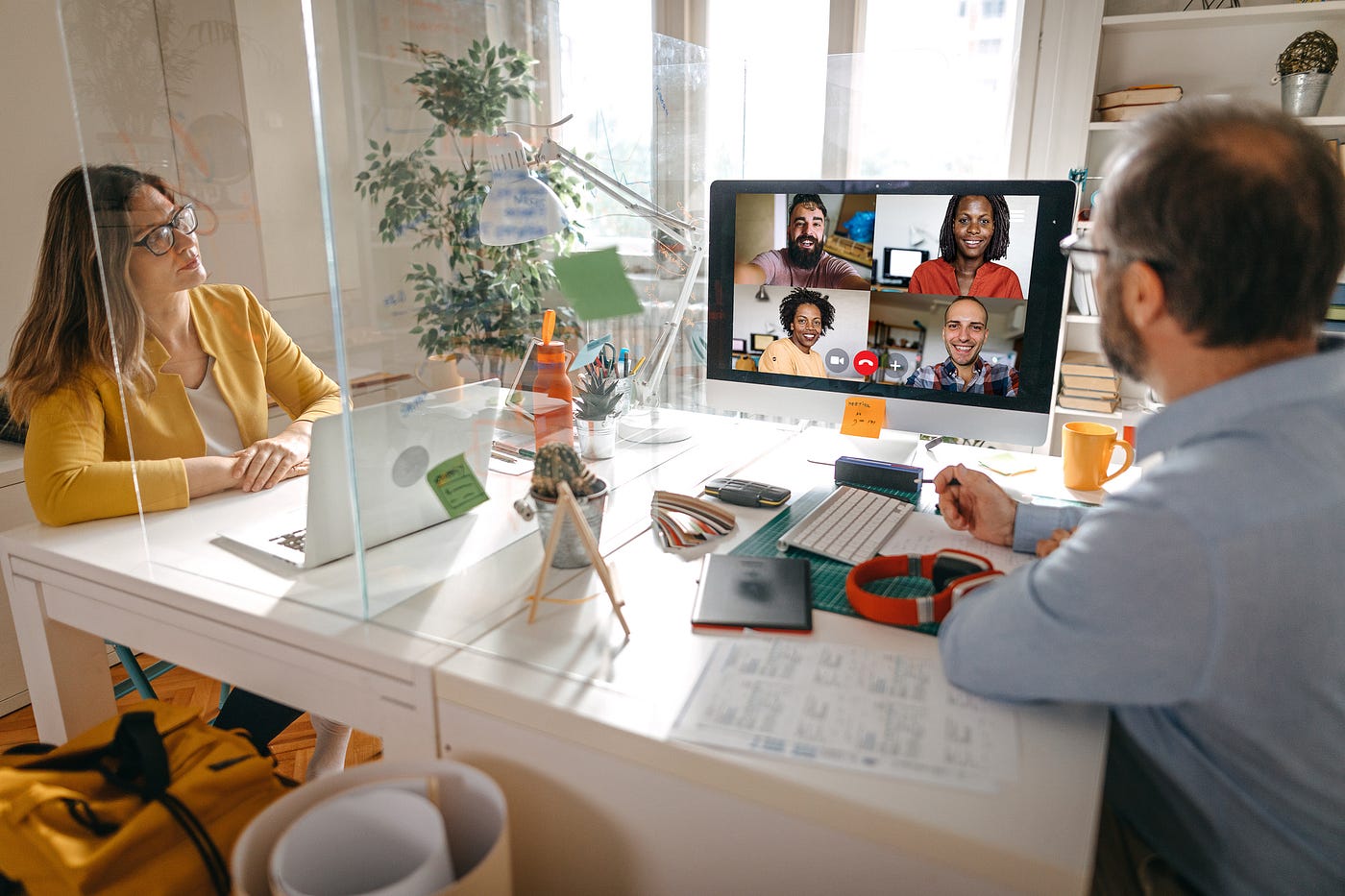
Ben Kalevitch, EVP, and Jasmine Jones, senior manager, share four key strategies to help HR leaders understand and address cultural challenges associated with the hybrid work model. Read more on Human Resource Executive here.
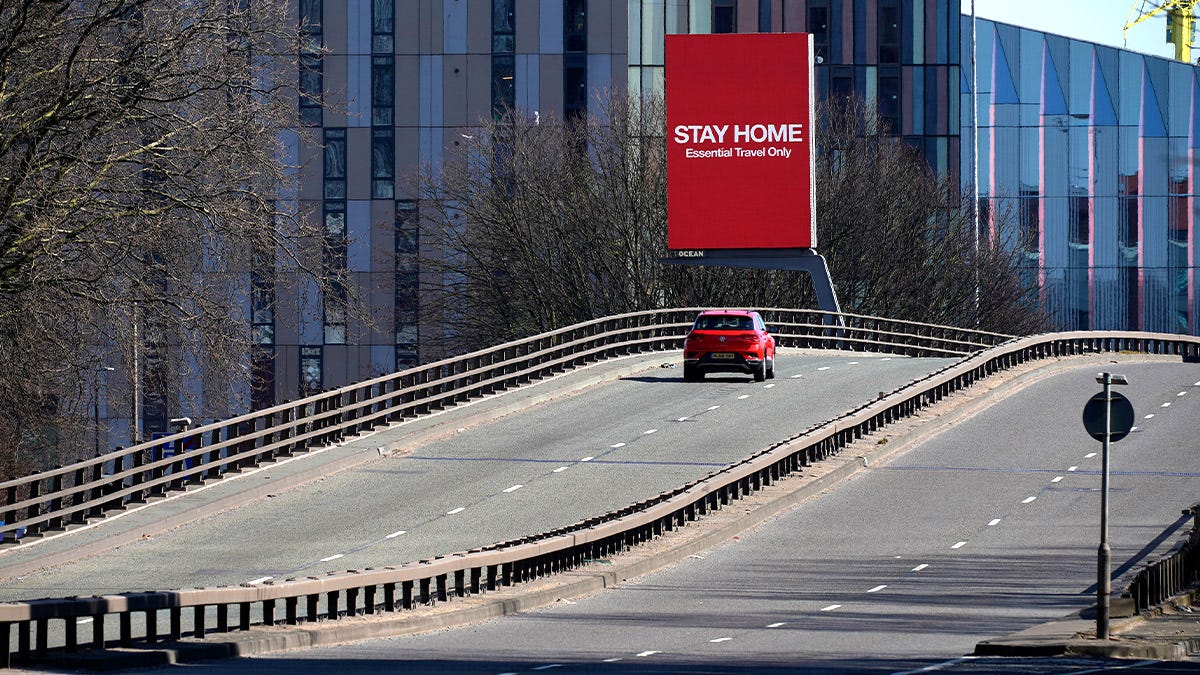
Sarah Clayton, EVP, and Anthea Hoyle, EVP, share their perspectives and advice for managing employee anxiety as they look to return to the workplace. Read more here on Harvard Business Review.


